
Inspired by historic gold lunula.
Tresor - A modern jewellery fair.
Tresor is my first fair of the winter season. It will be at the Royal Cornwall Museum in Truro on the 1st and 2nd November and will be the first event to see Cornish jewellers come together to showcase the wide variety of talent in the county.
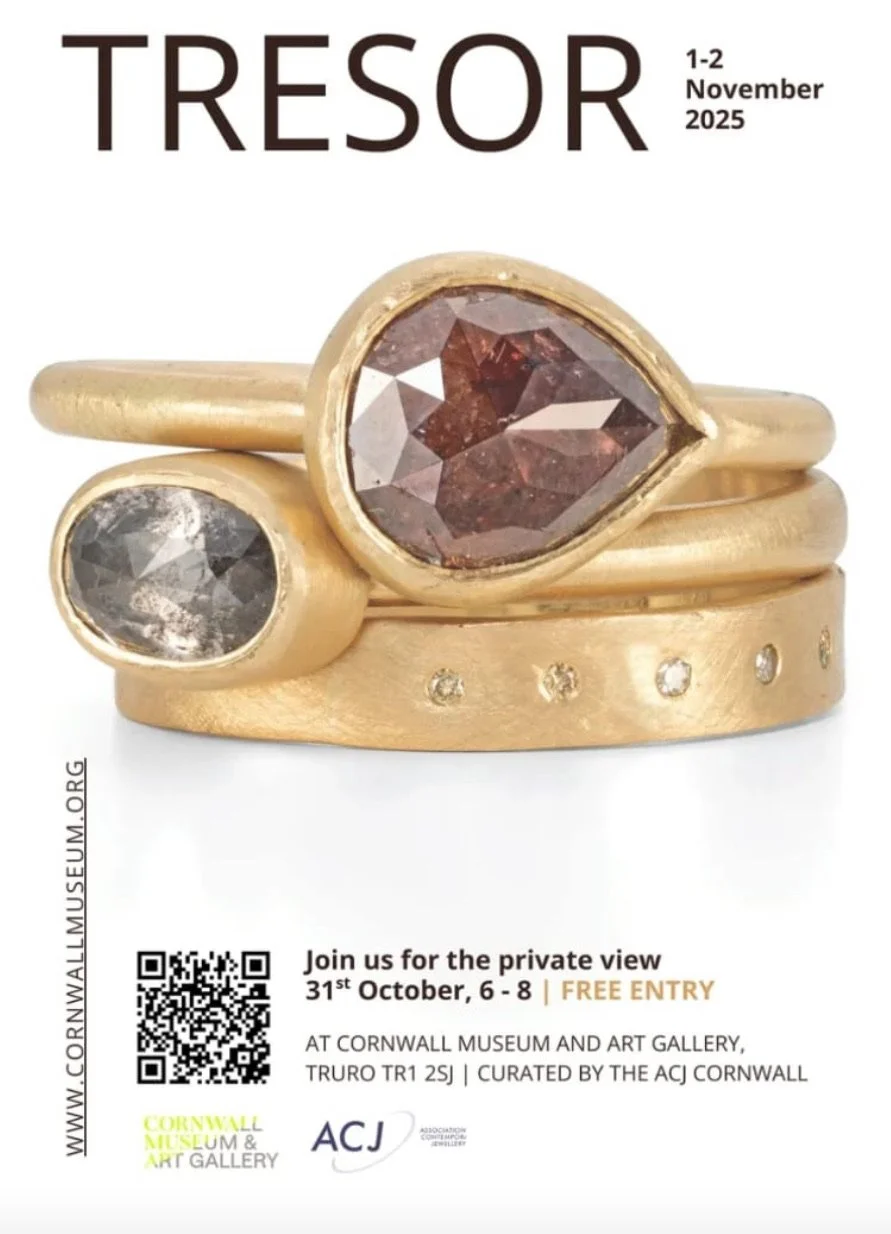
Each jeweller was invited to visit the museum to choose a piece from its collection which inspired them to create new work. Personally, I have always loved the historic gold lunula on display. Their fineness and their age are testaments to the human ability to be creative with the materials and tools at hand, regardless of technology.
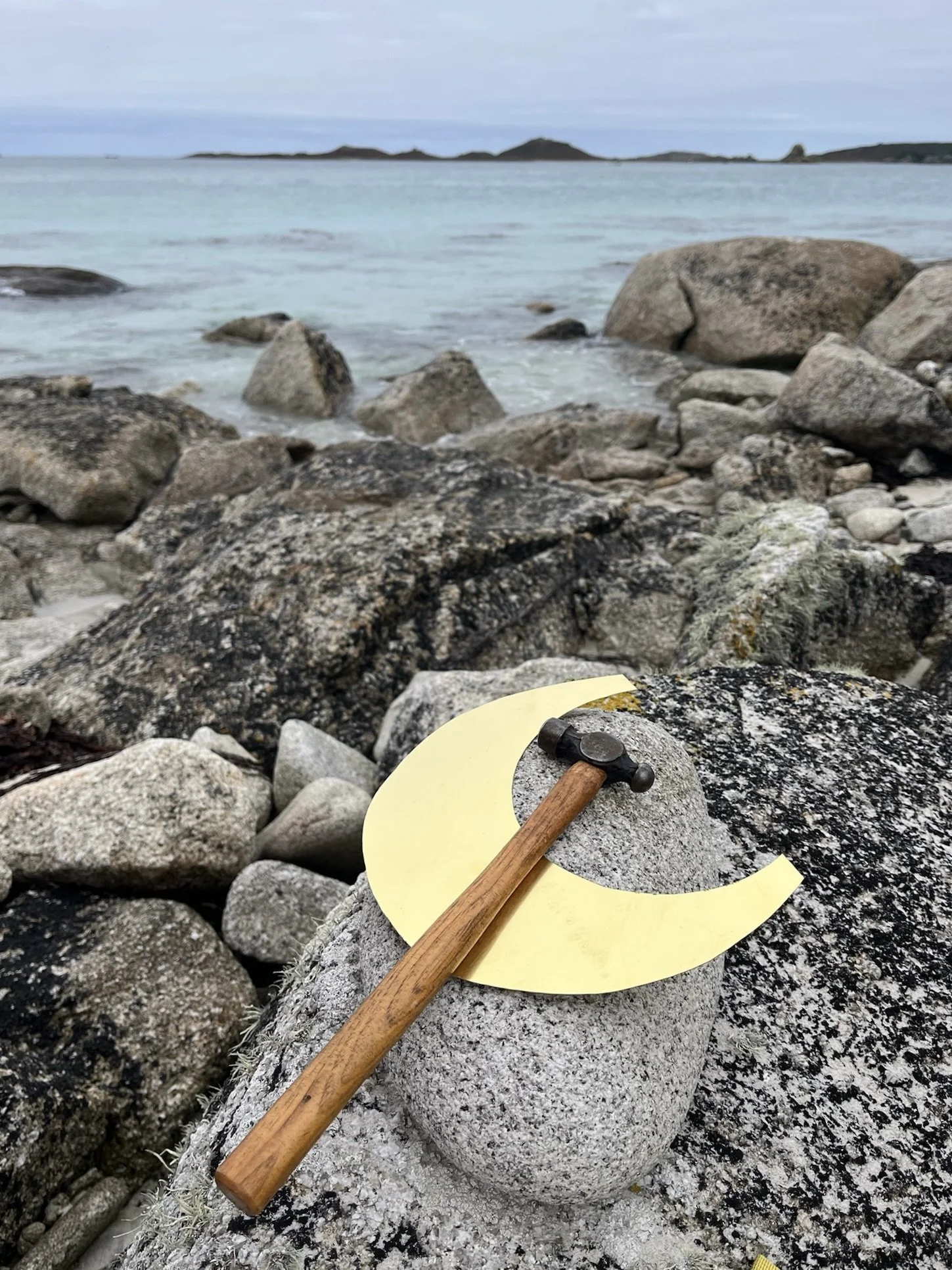
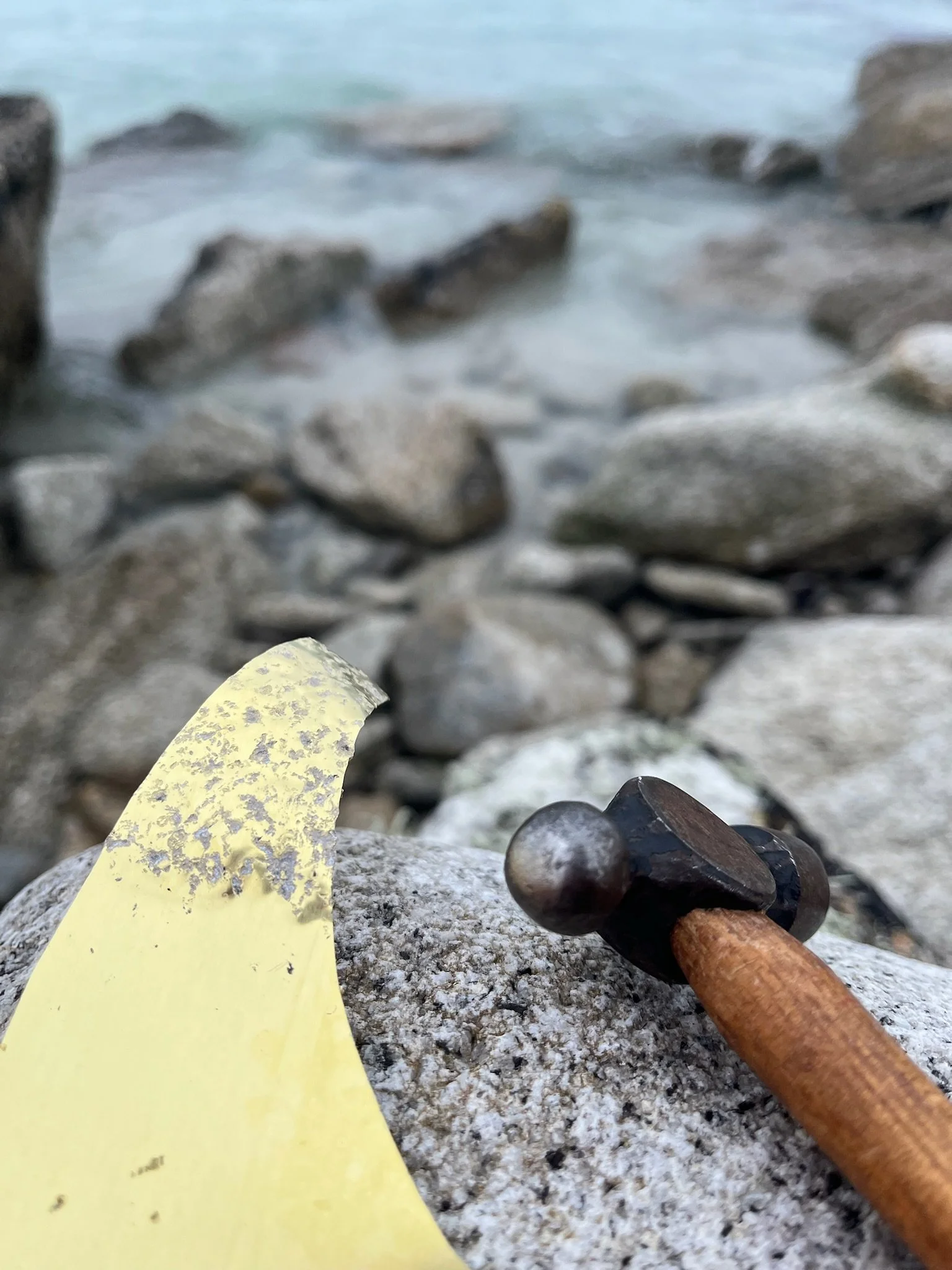
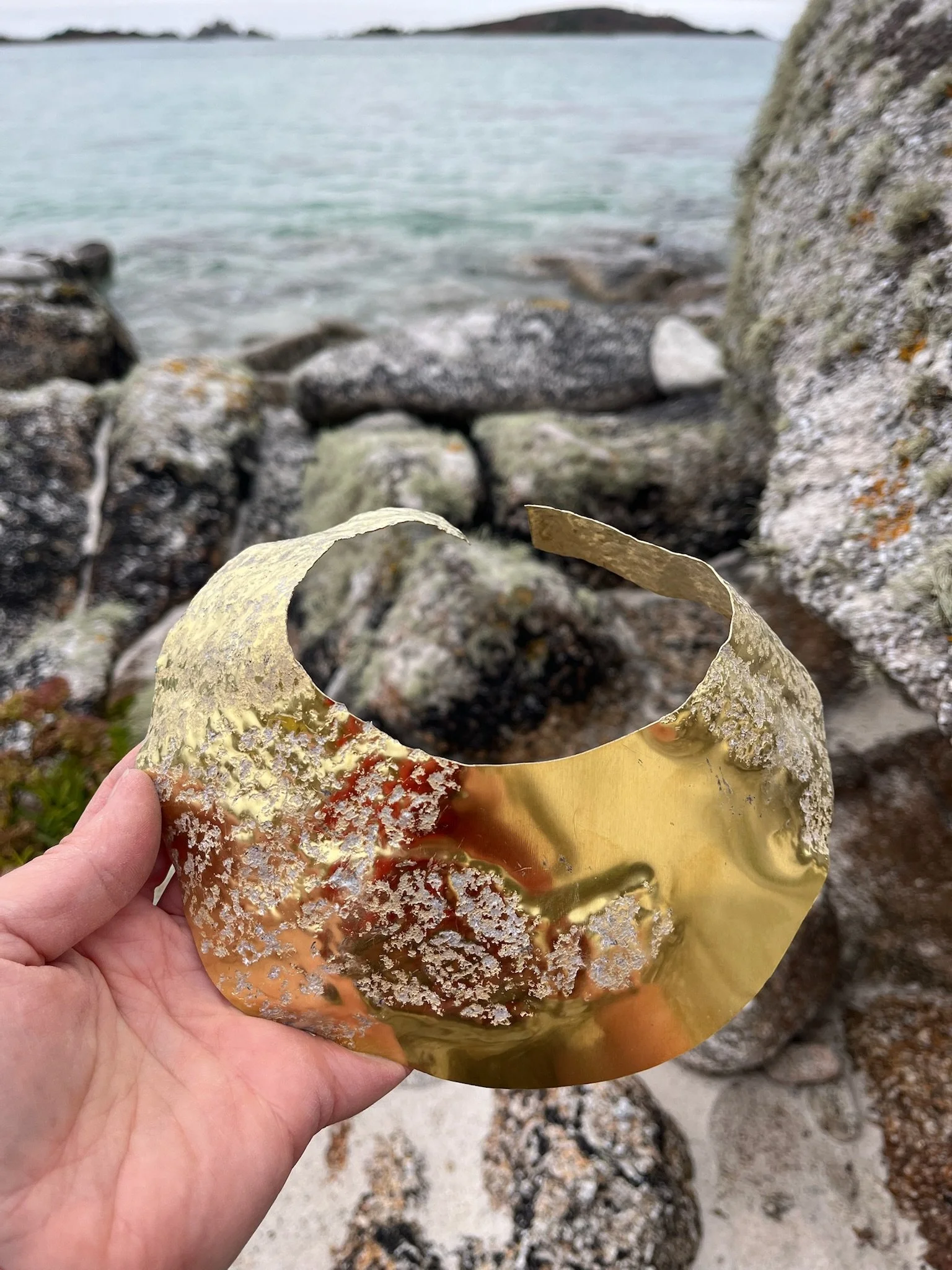
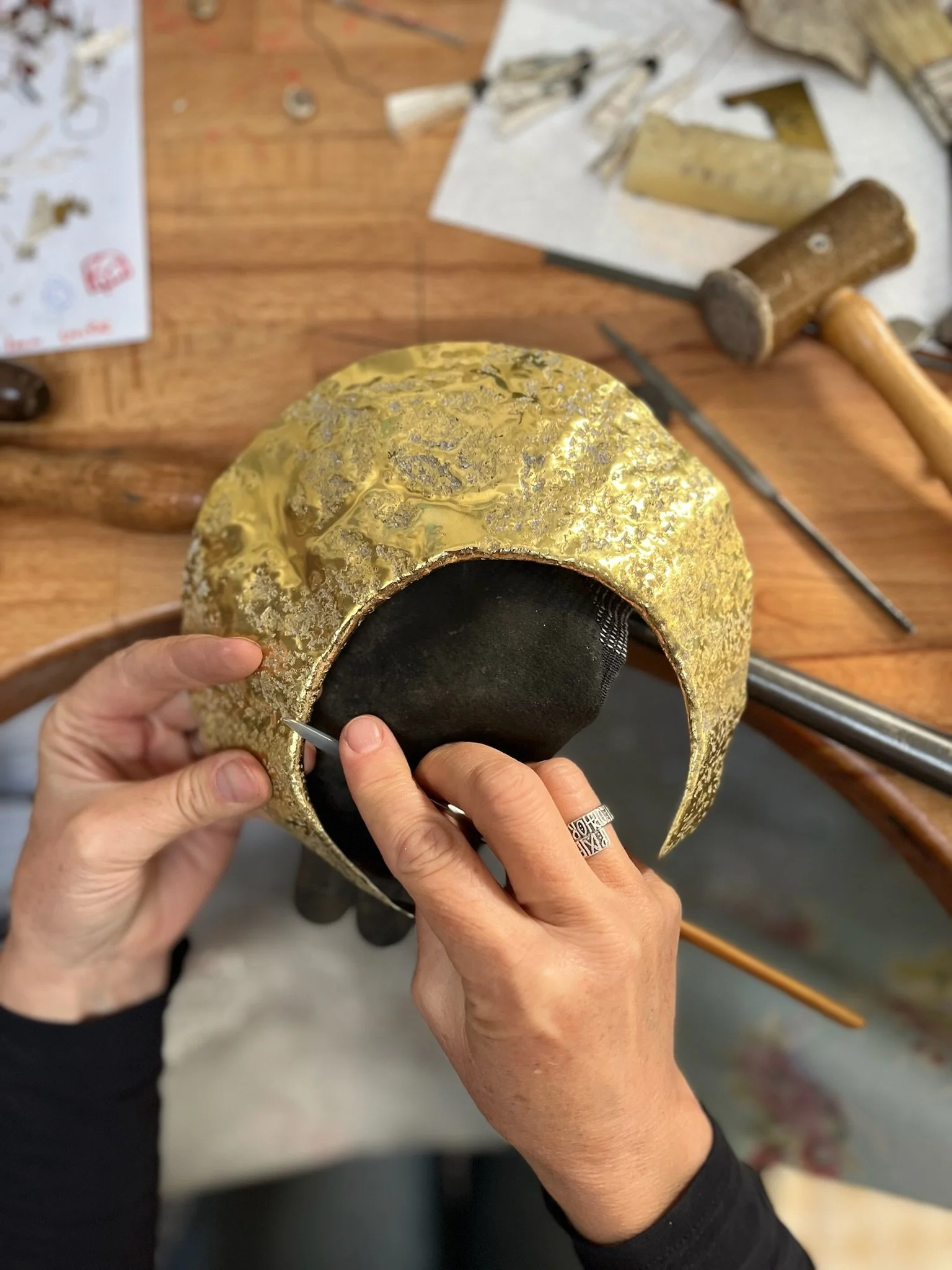
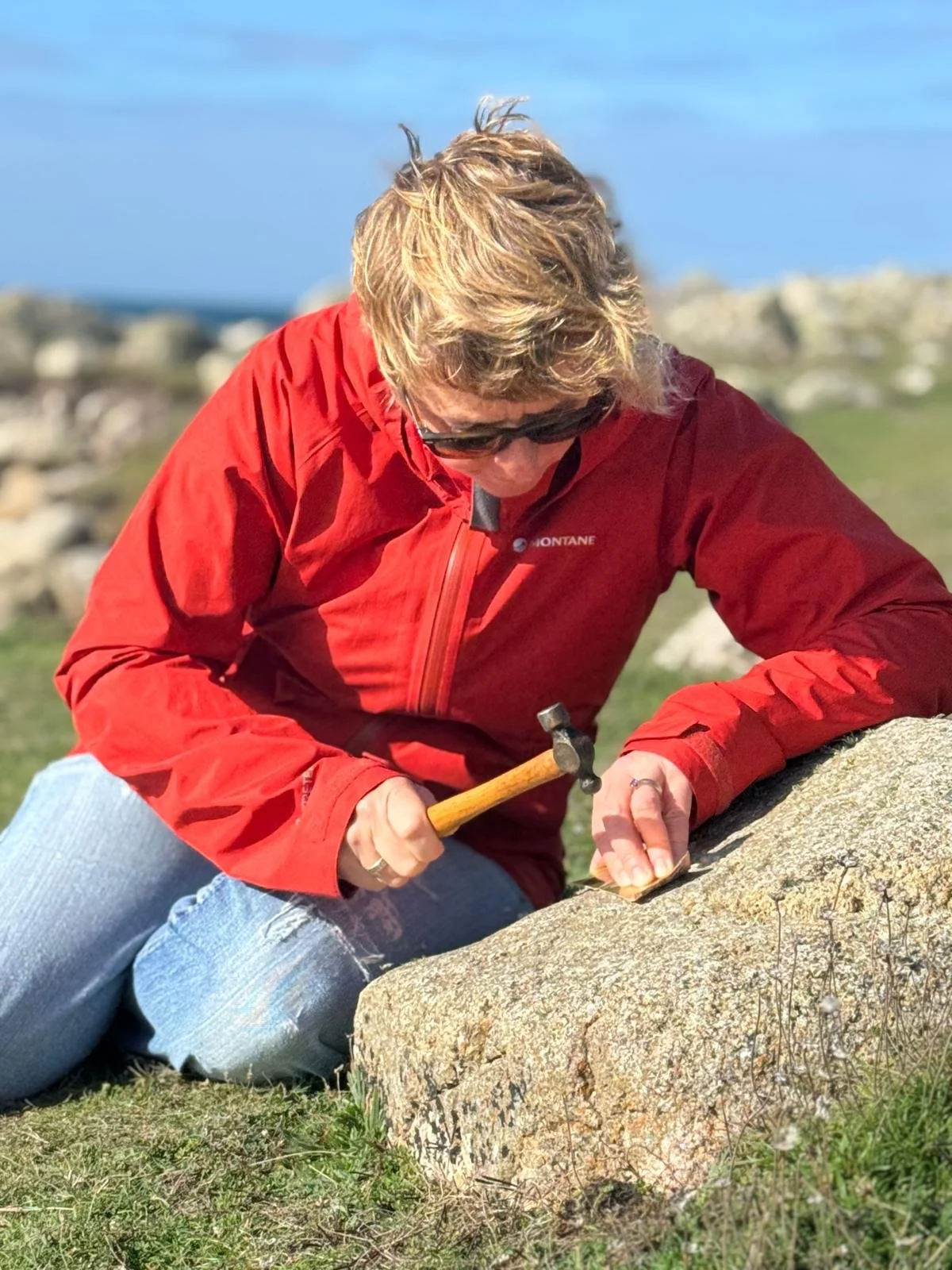
Over the past 2 years I have been developing pieces of jewellery which are textured using carefully selected rocks on the coastline around Cornwall and up on the tors of Dartmoor. I decided that this texture would be the perfect surface decoration for this brand new piece I was contouring in my mind.
Inspired by the historic gold lunula, I set off to Tresco with my hammer and a sheet of metal in my bag and scoured the beaches on the north western edge of the island to find the perfect stones. Between Green Porth and Pentle bay, I found a great spot, the tide was rising and the sun was shine in a blue sky. I used 4 rocks in the end, all had different qualities from beautiful seams to more uniform texture. Over the afternoon, I worked away at the metal until I had the rough form for the piece and the right amount of texture. By 5pm, It was time to pack it away carefully until I could get back to my workshop to begin the thoughtful work of refining, smoothing and burnishing the piece.
Gold Lunula are iconic and beautiful objects from the Early Bronze Age, dating to around 2200–1950 BC. In 1864, two gold lunula were found on a dig near Harlyn Bay in Cornwall.
To make these objects, the craftsperson would have had to hammer out and shape a gold ingot which would have required a great deal of skill. One of the Harlyn Bay lunulae is approximately 180mm in diameter, whilst the other is 210mm. The flat collar would have been worked with great precision adding the intricate detailing before careful polishing of the incredibly fine gold. The gold is very thin – less than a millimetre – and the lunulae weigh 64.5g and 138 g.
If you click on the grey box above, it will take you to the National Museums of Scotland page where you can read more about these incredible objects and the skilled crafts people who made them.
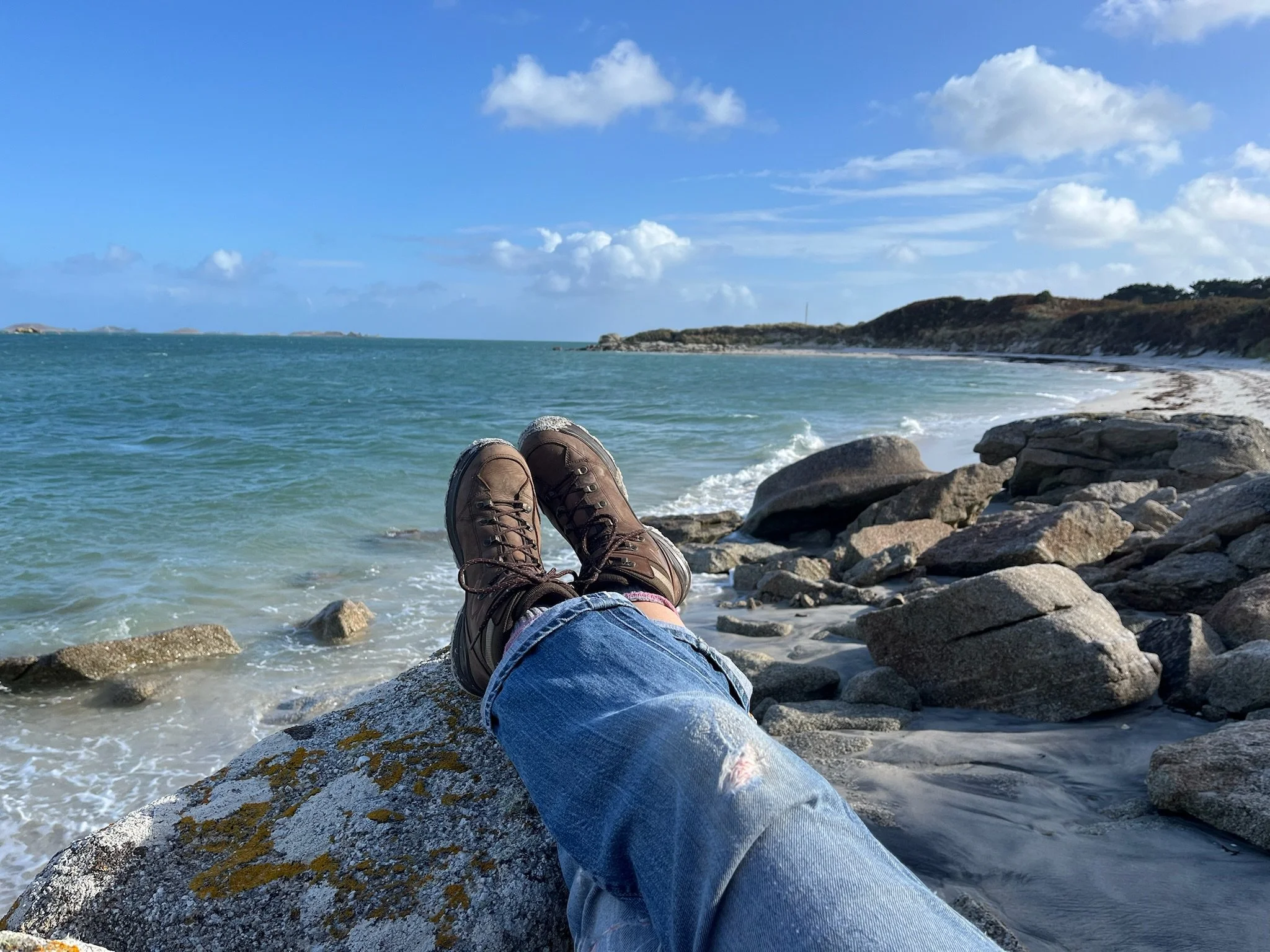
Having a little break in the sunshine. Looking out to the Eastern Isles.